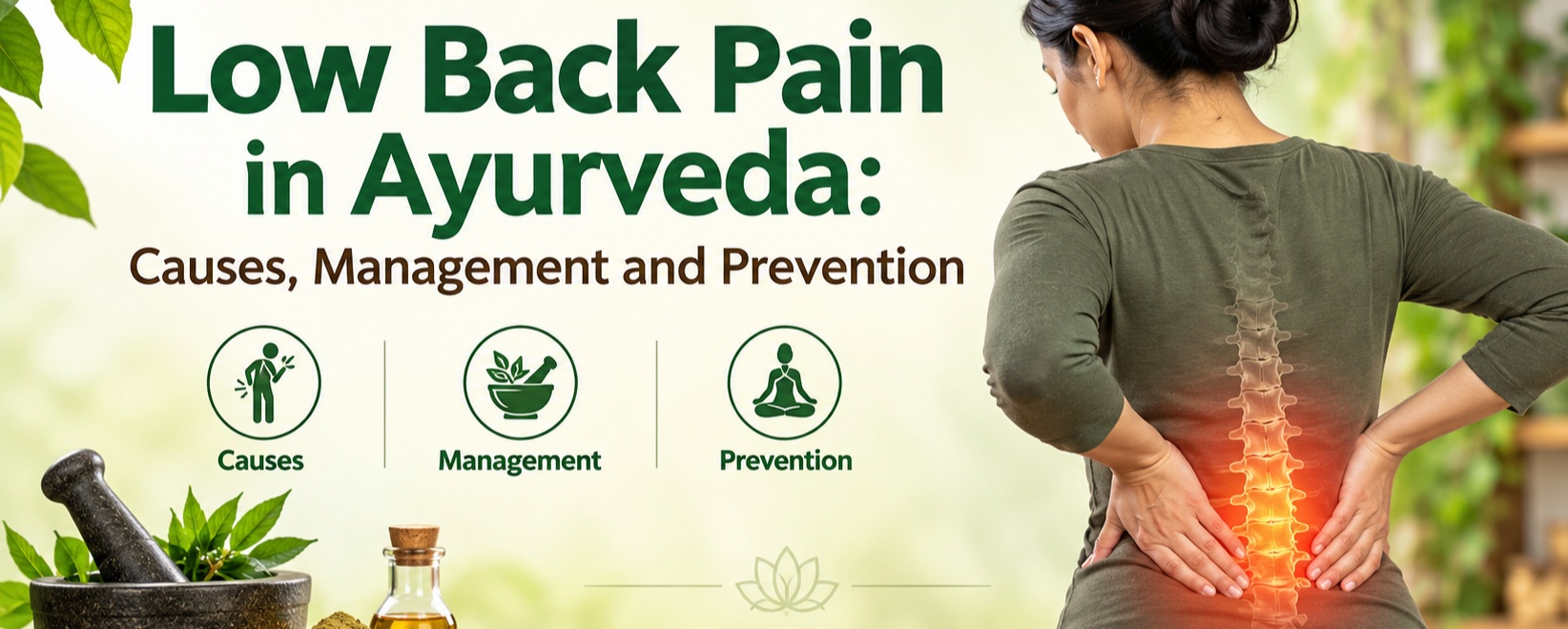
Low back pain is one of the most common reasons people visit a doctor, and it affects office workers, homemakers, farmers, drivers and older adults alike. Ayurveda, the ancient Indian system of medicine, has described this condition for centuries and offers a holistic approach that goes beyond simply relieving pain.
Low Back Pain in Ayurveda: The Concept
In Ayurvedic texts, low back pain is generally called Kati Shoola (kati = lower back or waist, shoola = pain). Related terms include:
- Kati Graha: stiffness or catching of the lower back
- Trika Graha: stiffness in the lumbosacral region
- Gridhrasi: pain radiating from the back down the leg, similar to sciatica
Ayurveda treats the lower back and pelvic region as the main seat of Vata dosha. Vata governs movement, and when it becomes aggravated (Vata prakopa), it can cause pain, stiffness, dryness and reduced mobility in the back.
Causes (Nidana) According to Ayurveda
Ayurveda looks at both lifestyle and constitutional causes:
- Vata-aggravating habits: excess travel, irregular routines, staying up late, and suppressing natural urges
- Improper posture: prolonged sitting, bending or standing, and slouching at work
- Overexertion or sudden strain: lifting heavy weights or awkward movements
- Diet: excess dry, cold, stale or light foods, and too many bitter, astringent or pungent tastes
- Cold and damp exposure: cold winds, air conditioning directly on the back, and sleeping on the floor without support
- Excessive fasting or weakness of the body tissues (dhatu kshaya)
- Ageing: Vata naturally increases with age, so degenerative back problems become more common
- Accumulation of Ama (toxins) in the joints and tissues, which can combine with Vata and cause stiffness and heaviness
- Trauma or injury
Common Symptoms
- Dull, aching or sharp pain in the lower back
- Stiffness, especially in the morning or after rest
- Pain on bending, sitting or standing for long periods
- Radiating pain to the buttocks or legs
- Cracking or crackling sounds in the back
- Relief with warmth and gentle massage (a typical sign of Vata involvement)
Ayurvedic Management (Chikitsa)
The general principles are to pacify Vata, remove Ama where present, nourish the tissues and restore strength and mobility.
Specialised Local Therapies
- Kati Basti: warm medicated oil is retained over the lower back in a ring made of dough. It is one of the most popular treatments for lumbar pain and stiffness.
- Patra Pinda Sweda: hot herbal poultices made of medicinal leaves.
- Pizhichil: a continuous stream of warm medicated oil poured over the body with gentle massage.
- Upanaha: warm herbal poultices applied and bandaged over the affected area.
- Greeva/Kati Lepa: application of medicated herbal pastes.
3. Panchakarma
For chronic or severe cases, a practitioner may recommend Basti (medicated enema), considered the foremost treatment for Vata disorders. Mild purgation (Virechana) may also be used in some conditions.
4. Internal Medicines
A qualified Ayurvedic physician may prescribe formulations based on your constitution and condition. Commonly used herbs and preparations include:
- Ashwagandha: strengthens muscles and nerves and reduces stress
- Shallaki (Boswellia): traditionally used for joint and inflammatory conditions
- Guggulu preparations such as Yogaraj Guggulu or Trayodashanga Guggulu
- Rasna, Nirgundi, Eranda and Dashamoola: used for pain and Vata disorders
- Medicated oils such as Mahanarayana Taila, Sahacharadi Taila or Dhanwantharam Taila
These should be taken only under the guidance of a qualified practitioner, as the dose and combination depend on the individual.
5. Diet (Pathya)
- Favour warm, freshly cooked, moist and easily digestible foods
- Include ghee, sesame oil, garlic, ginger, turmeric, cooked vegetables, soups, milk and whole grains
- Use spices such as cumin, ajwain and asafoetida to aid digestion
- Avoid cold drinks, raw or dry foods, excess caffeine, fried and processed foods, and skipping meals
6. Yoga and Gentle Exercise
Once acute pain settles, gentle movement helps strengthen the back and improve flexibility. Options often suggested include:
- Marjaryasana-Bitilasana (cat-cow)
- Bhujangasana (cobra pose)
- Shalabhasana (locust pose)
- Setu Bandhasana (bridge pose)
- Pawanmuktasana (wind-relieving pose)
- Tadasana (mountain pose)
Avoid forceful forward bends and deep twists during an acute episode, and learn the poses from a trained teacher.
Prevention: Steps to Keep Your Back Healthy
Ayurveda emphasises prevention as much as cure. These practices help keep Vata balanced and the spine strong:
- Follow a regular daily routine (Dinacharya). Sleep and wake at consistent times, and avoid late nights.
- Practise daily oil massage (Abhyanga). Sesame oil applied to the back and joints nourishes tissues and pacifies Vata. Warm the oil slightly first.
- Maintain good posture. Sit upright with back support, keep your feet flat and take breaks every 30 to 45 minutes to stand and stretch.
- Lift correctly. Bend your knees, keep the load close to your body and avoid sudden twisting.
- Choose a supportive mattress. It should be firm but not hard.
- Stay warm. Protect your back from cold wind and direct air conditioning.
- Eat Vata-balancing meals. Take warm, nourishing food at regular times.
- Exercise regularly. Walking, yoga and core-strengthening keep the spine supported.
- Maintain a healthy weight. Extra weight increases stress on the lower back.
- Manage stress. Pranayama (such as Anulom Vilom and Bhramari) and meditation calm Vata and reduce muscle tension.
- Don’t suppress natural urges, and don’t overexert yourself.
- Consider seasonal Panchakarma. Some people undergo periodic cleansing and rejuvenation under expert supervision.
When to See a Doctor Immediately
Back pain is often benign, but seek prompt medical attention if you have:
- Numbness or weakness in the legs
- Loss of bladder or bowel control
- Severe pain following a fall or injury
- Fever with back pain
- Unexplained weight loss
- Pain that worsens at night or doesn’t improve with rest
Final Thoughts
Ayurveda views low back pain as a sign of imbalance rather than just a local problem. By combining therapies, suitable herbs, mindful eating, yoga and healthy daily habits, it aims to relieve pain and address the underlying cause. Ayurveda works best alongside modern medical evaluation, especially in serious or persistent cases.