
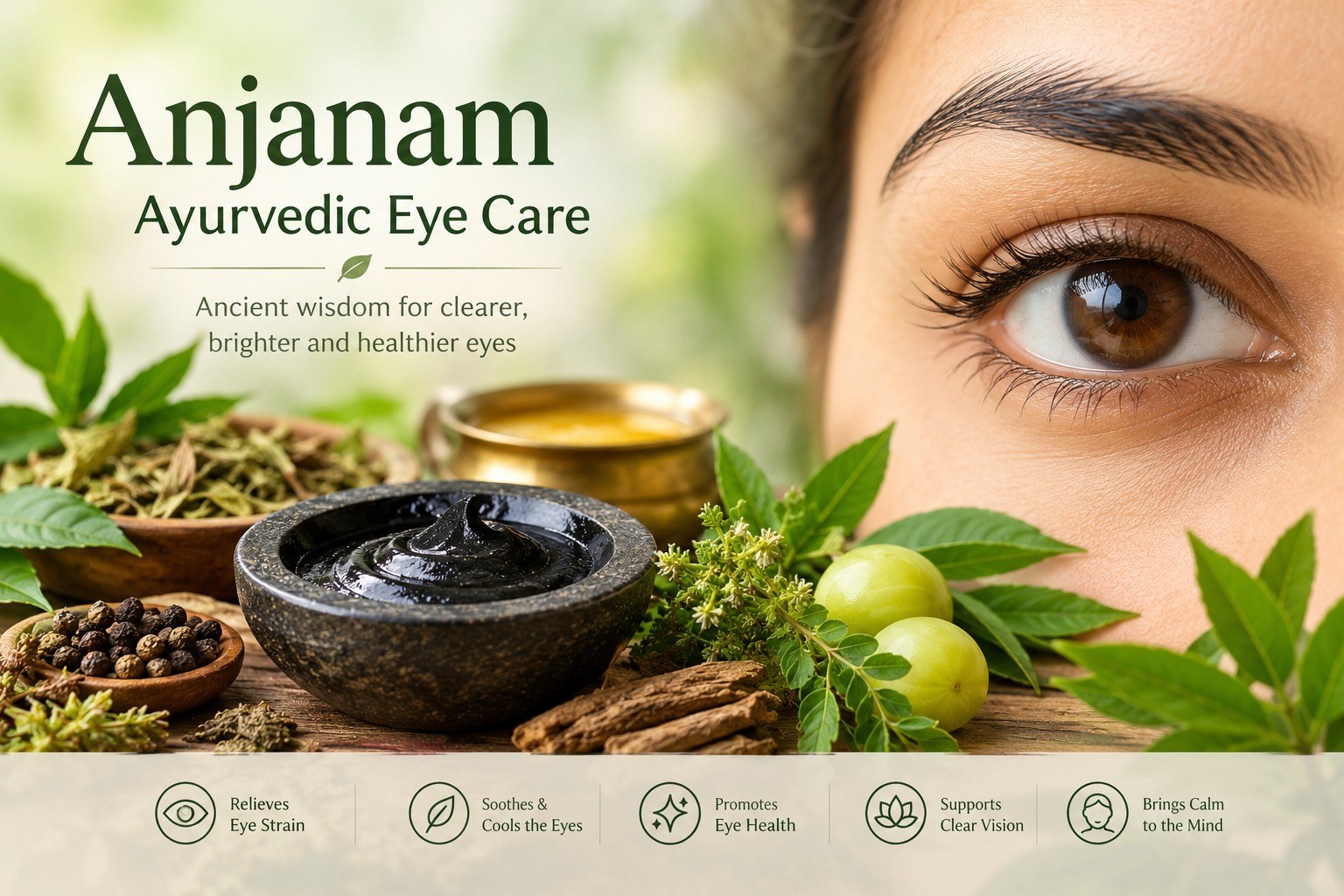
Our eyes work from the moment we wake up until we sleep, with screens, dust, sunlight and pollution adding to the strain. Ayurveda gives the eyes special attention and describes a set of daily and periodic practices to protect them. One of the best known is Anjanam, the application of medicated collyrium to the eyes.
What is Anjanam? Anjana (also called Anjanam) is the application of a medicinal paste, powder or salve along the inner lining of the eyelids. It is one of the eye therapies in the classical texts and is also listed as part of the daily routine (Dinacharya) for healthy eyes.
In Ayurveda, the eyes are linked to Alochaka Pitta, the subtype of Pitta dosha associated with vision, and are described as especially prone to accumulation of Kapha (mucus, heaviness) and Pitta (heat, redness). Anjanam is meant to keep these in balance.
Types of Anjanam
Classical texts describe Anjana based on its action:
Lekhana Anjana (scraping): reduces excess Kapha, discharge, heaviness and thickening. Ropana Anjana (healing): supports healing and strengthens tissues. Prasadana Anjana (soothing and clarifying): calms Pitta, relieves burning and improves clarity and comfort.
It is also classified by form:
Pindanjana: a thick paste or tablet, rubbed with water or other liquids before use. Rasakriya: a thickened herbal extract. Churnanjana: a fine powder, usually for lighter, daily-use preparations. Commonly Used Ingredients Sauviranjana: a classical mineral preparation, used only after proper purification. Rasanjana: a thickened extract traditionally prepared from Berberis (Daruharidra). Triphala: known for supporting eye health. Honey, ghee and rock salt: used in certain formulations. Camphor and herbal ingredients in some preparations.
Important safety note: Many commercial or home-made kajal, surma and “sudha” products sold in markets may contain lead or other heavy metals or be made with impure ingredients. These can be harmful, particularly for children and infants. Use only products prepared and certified by reputable Ayurvedic manufacturers, ideally recommended by a qualified practitioner.
Benefits of Anjanam
According to Ayurvedic tradition, regular and correct use may help to:
Keep the eyes cool, clear and comfortable Reduce burning, itching, watering and stickiness Support the removal of excess Kapha and impurities from the eyelid lining Soothe eye strain and fatigue from long hours of reading or screen use Support visual clarity and general eye health Protect against the effects of dust and environmental exposure
These are traditional claims. Modern scientific evidence for Anjanam is limited, so it should complement, not replace, regular eye checkups.
When and How It Is Used
Traditionally:
Sauviranjana was applied daily, while Rasanjana was used occasionally, around once every 5 to 8 days, to clear Kapha. It is best applied in the evening or at night, since bright sunlight can irritate eyes that have just been treated. It is applied with a clean rod (shalaka) from the outer to the inner corner of the eyelid lining. Eyes are then closed gently and rolled so the medicine spreads, with tears allowed to flow.
Anjanam should be taught and prescribed by a trained practitioner, particularly the first time.
When to Avoid Anjanam
Traditional texts advise avoiding it:
During fever, indigestion or acute illness Right after a head bath When sleep-deprived or after intense crying, anger or grief When there is an active eye infection, injury or severe pain In very bright sunlight or immediately before going out in the sun
It should not be used by anyone with eye surgery, glaucoma or other serious eye disease without medical advice.
Other Ayurvedic Eye Care Therapies
Ayurveda offers several other treatments, usually done under supervision:
Netra Tarpana: a reservoir of medicated ghee is held around the eyes, nourishing them and relieving dryness and strain. Aschyotana: medicated eye drops for mild redness, irritation or burning. Seka: a gentle stream of cool herbal liquid poured over closed eyes. Putapaka: a more intensive, nourishing eye treatment. Netra Prakshalana: washing the eyes with filtered, cooled Triphala water. Nasya: medicated oil drops in the nose, believed to benefit the head, eyes and sensory organs. General Eye Care in Daily Life Habits Follow the 20-20-20 rule. Every 20 minutes, look at something 20 feet away for 20 seconds. Blink often when using screens, and keep screens at a comfortable distance and brightness. Wash your face and eyes with cool water after coming in from dust or heat. Sleep 7 to 8 hours at consistent times. Late nights aggravate Pitta and strain the eyes. Wear sunglasses outdoors and avoid staring at the sun or very bright lights. Avoid rubbing your eyes, and use clean hands, towels and cosmetics. Rest your eyes with palming: rub your palms warm and cup them gently over closed eyes for a minute. Practise Trataka (steady gazing) at a candle flame or fixed point, only after learning from a qualified teacher. Massage your feet with oil (Padabhyanga) before bed. Ayurveda links this to better sleep and eye health. Diet for Healthy Eyes Eat fresh fruits and vegetables, especially amla, carrots, papaya and green leafy vegetables Include ghee in moderate amounts, as it is considered good for the eyes Use Triphala as advised by a practitioner Include almonds, seeds and whole grains Stay well hydrated Limit excess spicy, sour, salty and fried food, which aggravates Pitta, along with too much caffeine and alcohol Avoid smoking Eye Exercises Slowly look up and down, then left and right Rotate your eyes gently in circles, both ways Focus alternately on a near and a far object When to See an Eye Specialist
Do not rely on home remedies if you have:
Sudden loss or blurring of vision Severe eye pain or redness Flashes of light, floaters or a “curtain” over your vision Eye injury or a foreign body Persistent discharge, swelling or light sensitivity Double vision Diabetes, high blood pressure or a family history of glaucoma (get regular eye examinations)